
Choosing the right insulated cable for industrial use is more than just a technical choice—it determines safety, performance, and reliability effectively. Besides, the harsh industrial environment often feature high temperature, chemicals, moisture, mechanical stress and more. That why choosing the right insulation material and cable type is paramount for uninterrupted production.
This post will be your companion to totally understanding this topic of finding the right insulated cable for industrial application by key considerations, insulation varieties and expert advice.
What Are Insulated Cables?
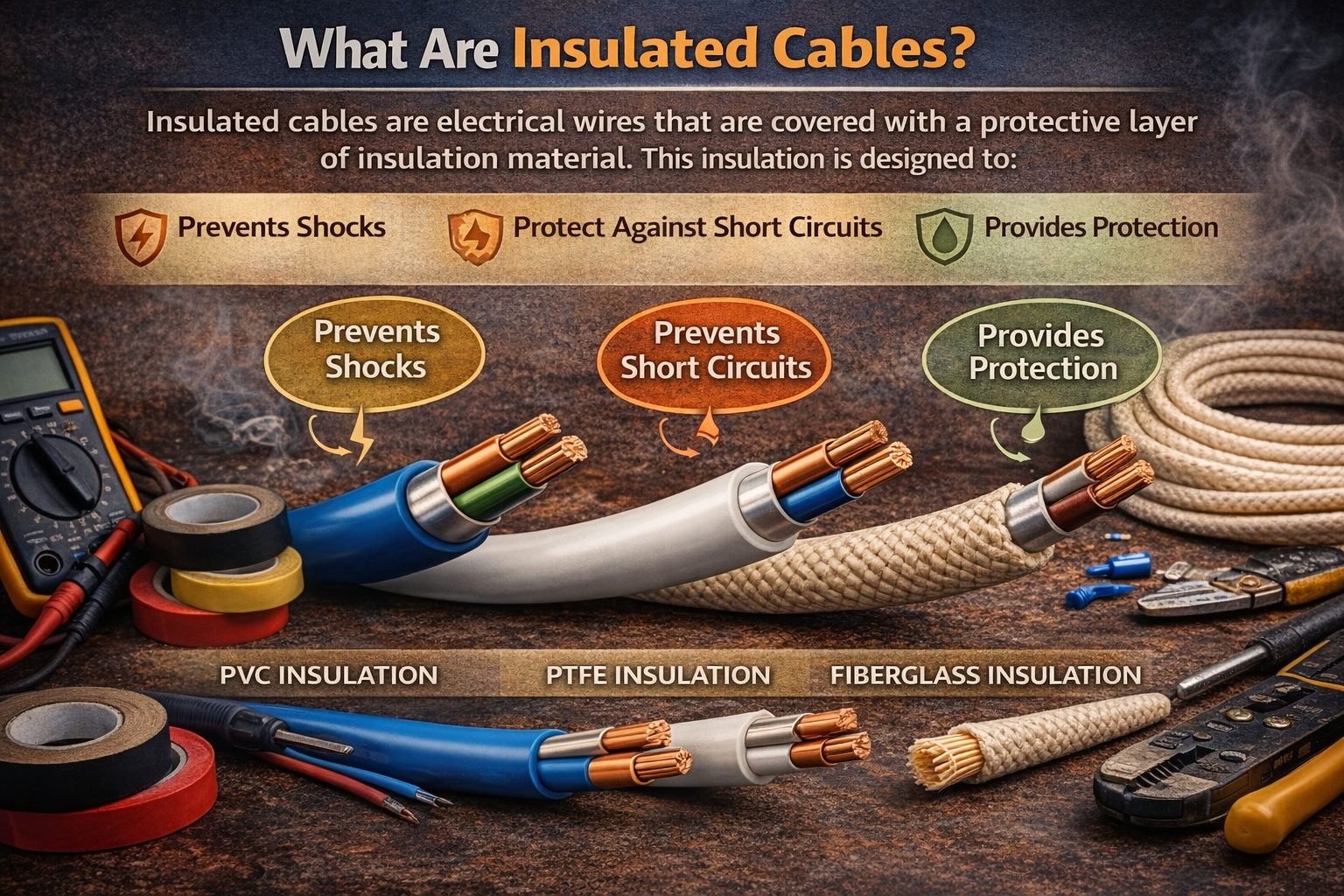
The insulated cables are electric conductors protected with layers of insulating materials that prevent current from leaking and shield the conductor from environmental hazards. These cables play a critical role in industrial environments where safety and resistance to wear are the two main concerns.
A reputable Fiberglass Insulated Cables Manufacturer makes sure that their products can sustain severe conditions while achieving safety and energy-efficiency.
Importance of Choosing the Right Cable in Industrial Use
Cables has to meet high standards of performance under industrial operation because:
- Equipment runs non-stop
- Sometimes, the environmental conditions are very severe (high temperature, chemicals, dust)
- A malfunction in the electrical system will cause significant losses
- There are safety standards that must be complied with
Not using the appropriate cable might provoke over-heating, short circuits, breakdown of machines and even fire disasters.
Essential Elements to Reflect When Purchasing Insulated Cables
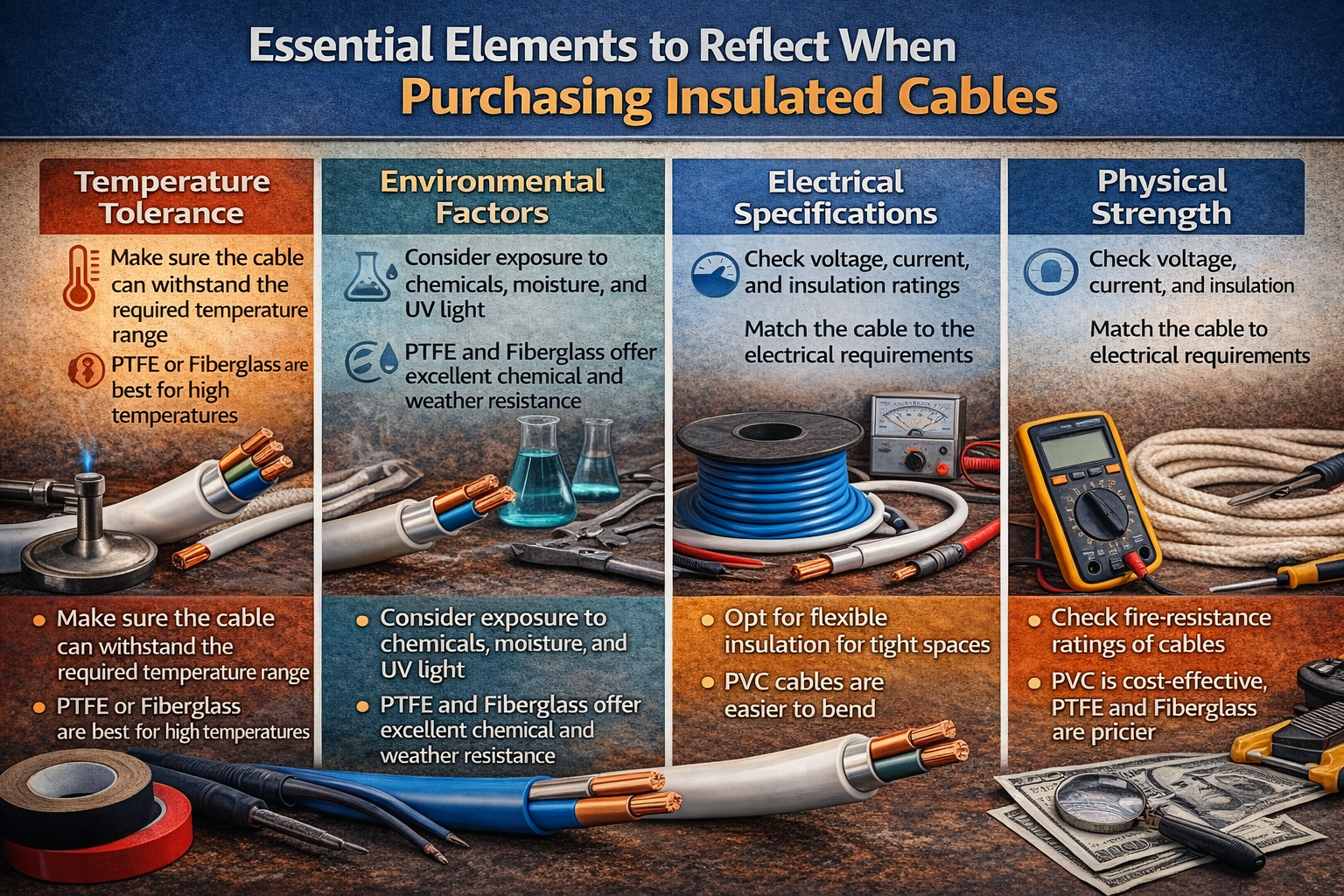
1. Temperature Tolerance
The capability of the cable to resist temperature is among the top features of a cable:
- Standard PVC cables are sufficient for low-temperature environments
- For high-temperature environments, fiberglass or PTFE cables come in handy
Fiberglass cables that are obtained from a trustworthy Fiberglass Insulated Cables Manufacturer have the thermal tolerance of the highest degree and thus, are very compatible for furnaces and heavy machinery.
2. Environmental Factors
Industrial cables may be subjected to different environmental factors:
- Water and moisture
- Chemicals and oils
- Sunlight (UV radiation)
- Dust and dirt
PTFE cables are the top recommendation for chemical-laden environment. Fiberglass insulation is best for heat-intensive environment.
3. Electrical Specifications
It is very important to know voltage and current ratings:
- Low voltage → PVC cables
- High voltage → PTFE or advanced insulation
- High-frequency systems → Specialized cables
Do not forget to always get compliant cables with the appropriate electrical standards so as to prevent system failures.
4. Physical Strength
Industrial cables are often subjected to mechanical stress caused by bending, vibration or impact.
Besides offering exceptional protection against abrasion and mechanical damages to the cables, fiberglass insulation sleeves, which come from a top Fiberglass Insulation Sleeves Manufacturer, also help to increase cable lifespan.
5. Ability to Bend
In locations where cables need to be bent or moved regularly, flexibility is an important feature.
- PVC cables are highly flexible
- PTFE cables offer moderate flexibility
- Fiberglass cables are less flexible but are quite durable
Make your choice on the basis of your installation requirements.
6. Ability to Resist Fire
A good fire safety is a must in industrial environment.
- PVC → Produces smoke when burned
- PTFE → Very good fire resistance
- Fiberglass → Superior fire resistance
Usually, fiberglass insulation is the first choice for areas prone to fire.
7. Price and Budget Consideration
Budget plays a very important role in decision making:
- PVC cables → Economical
- PTFE cables → Very costly
- Fiberglass cables → Carry a moderate to high cost
Even though PVC cables are cost-effective, buying durable cables from a dependable Fiberglass Insulated Cables Manufacturer will result in long-term savings since maintenance and replacement costs will be reduced.
Types of Insulated Cables for Industrial Usage
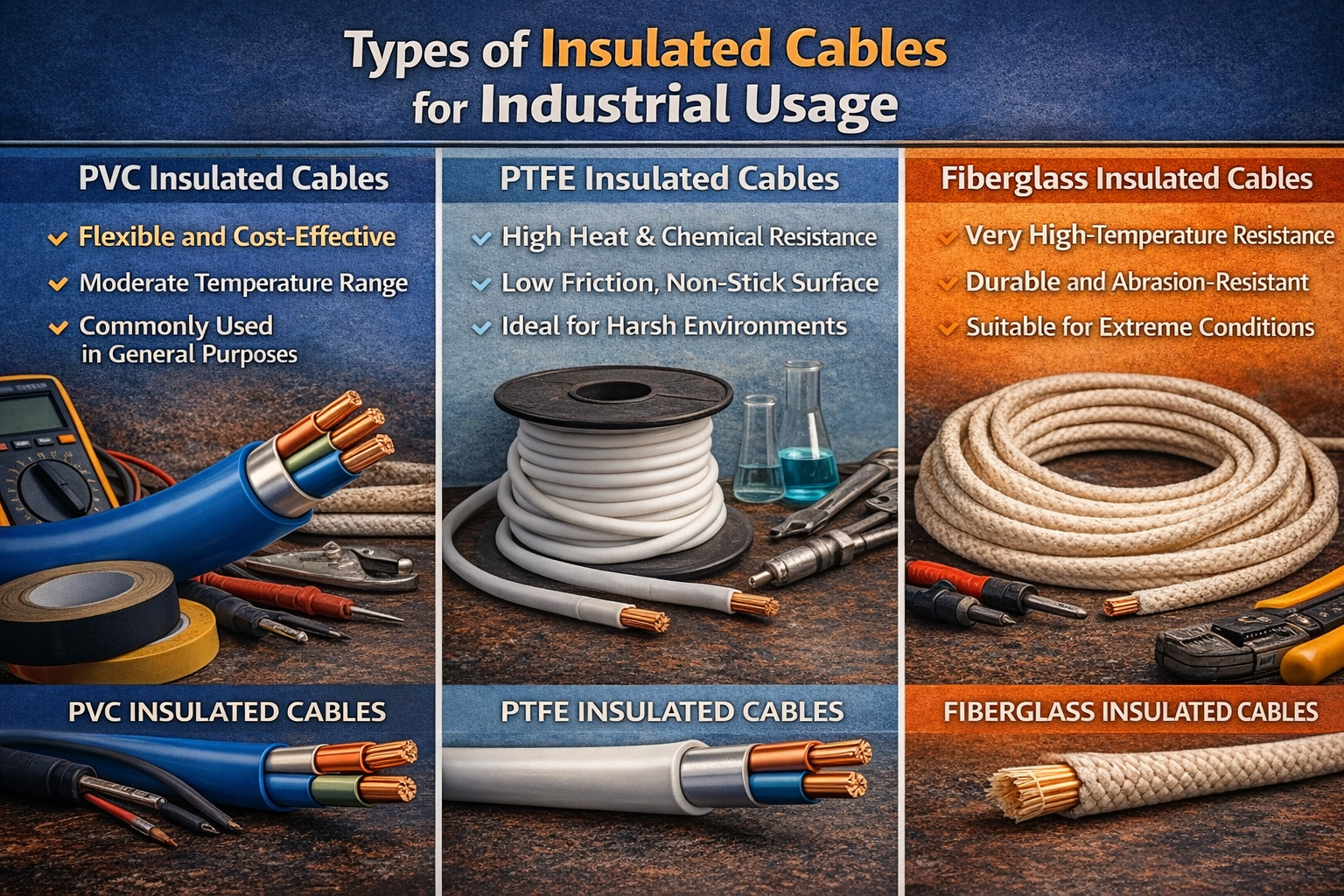
1. PVC Insulated Cables
The main reason why PVC cables are at the top of the list is that they are both cheap and flexible. Their performance level is quite satisfactory for industrial-type applications.
Use cases:
- Light industrial use
- Indoor wiring
- Low-temperature environments
2. PTFE Insulated Cables
PTFE cables have earned a reputation for being equipped with the finest set of features.
Use cases:
- Chemical industry
- High-temperature usage
- Aerospace, medical devices
3. Fiberglass Insulated Cables
Fiberglass cables have been tailored for operation even in extremely harsh conditions.
Use cases:
- Highly heated environments
- Heavy industries
- Power generation, furnaces
Contacting a reliable Fiberglass Insulated Cables Manufacturer for your requirements is your best bet for getting industrial-grade high-quality cables.
Why Fiberglass Insulation Sleeves Matter
Fiberglass insulation sleeves are a type of external protection that goes over cables to enhance their features.
A renowned Fiberglass Insulation Sleeves Manufacturer will offer you sleeves that:
- Withstand very high temperatures
- Prevent abrasion
- Provide electrical insulation
- Extend the service life of cables
These are critical parts of industries which frequently expose their electrical forms to high-temperature operations and mechanical wear.
Industry-Specific Cable Selection Guide
1. Manufacturing
- Has to use sturdy and flexible cables
- Exposure to machines and vibration
- PVC or fiberglass cables recommended
2. Metal and Steel
- Very high temperature
- Exposure to sparks and heat
Recommendation: Fiberglass insulated cables used with protective sleeves
3. Chemical
- Exposure to chemicals and other harsh substances
Recommendation: PTFE major component cables
4. Power
- High voltage, high temperature
- Powering of operations
Recommendation: Fiberglass, PTFE cables
5. Construction
- Temporary installations
- Exposure to weather
Recommendation: PVC major component cables
Common Mistakes People Make When Choosing Industrial Cables
Using the wrong cable may cause very detrimental consequences. Here are some common errors you should definitely avoid:
- Not taking into account temperature limits
- Choosing solely on the basis of price
- Forgetting about exposure to the elements
- Using substandard materials
- Skipping consultation with a trusted manufacturer
Don’t forget that working with a qualified Fiberglass Insulated Cables Manufacturer and Fiberglass Insulation Sleeves Manufacturer will make sure that you get a superior product that ensures quality and performance.
The Importance of Quality and Certification
Industrial cables should be up to the mark in terms of safety and quality standards. Be sure to check:
- IS/IEC certificates
- Heat resistance records
- Fire safety standards
- Durability tests
Elevated quality products are synonymous with enhanced functionality and prolonged lifespan.
Future Trends of Industrial Cable Technology
The cable manufacturing sector is constantly working on new technologies such as:
- Heat-resistant advanced materials
- Ecological insulation
- Smart monitoring cables
- Highly fire-resistant coating
Manufacturers are investing significantly in innovation to be able to fulfill the expectations of modern industries.
The Right Manufacturer—A Few Tips
It is just as crucial to carefully select the manufacturer that complements your choice of copper wire or cable.
Find out about:
- Years in the business
- Certificates for product quality
- Custom making possibility
- Review of clients
- Customer support that can be relied on
A dependable Fiberglass Insulated Cables Manufacturer and Fiberglass Insulation Sleeves Manufacturer will provide solutions for high-performance tailored to your requirements.
Choosing the right insulated cable for industrial use entails consideration of aspects such as temperature, environmental conditions, electrical requirements, and budget. PVC cables are suited for general purposes while PTFE cables and fiberglass cables are for chemical environment and high-temperature conditions respectively.
Moreover, using protective measures such as fiberglass insulation sleeves further improve cable performance as well as durability. Choosing a well-established Fiberglass Insulated Cables Manufacturer and Fiberglass Insulation Sleeves Manufacturer guarantees durable, safe and top quality products.
The correct decision not only enhances your capability to carry out operations efficiently but also contributes to safer environment and more economic operation over long periods of time.
Related Post:

